

What Is a Topical Skin Booster? A Practical Guide for Your Treatment Room
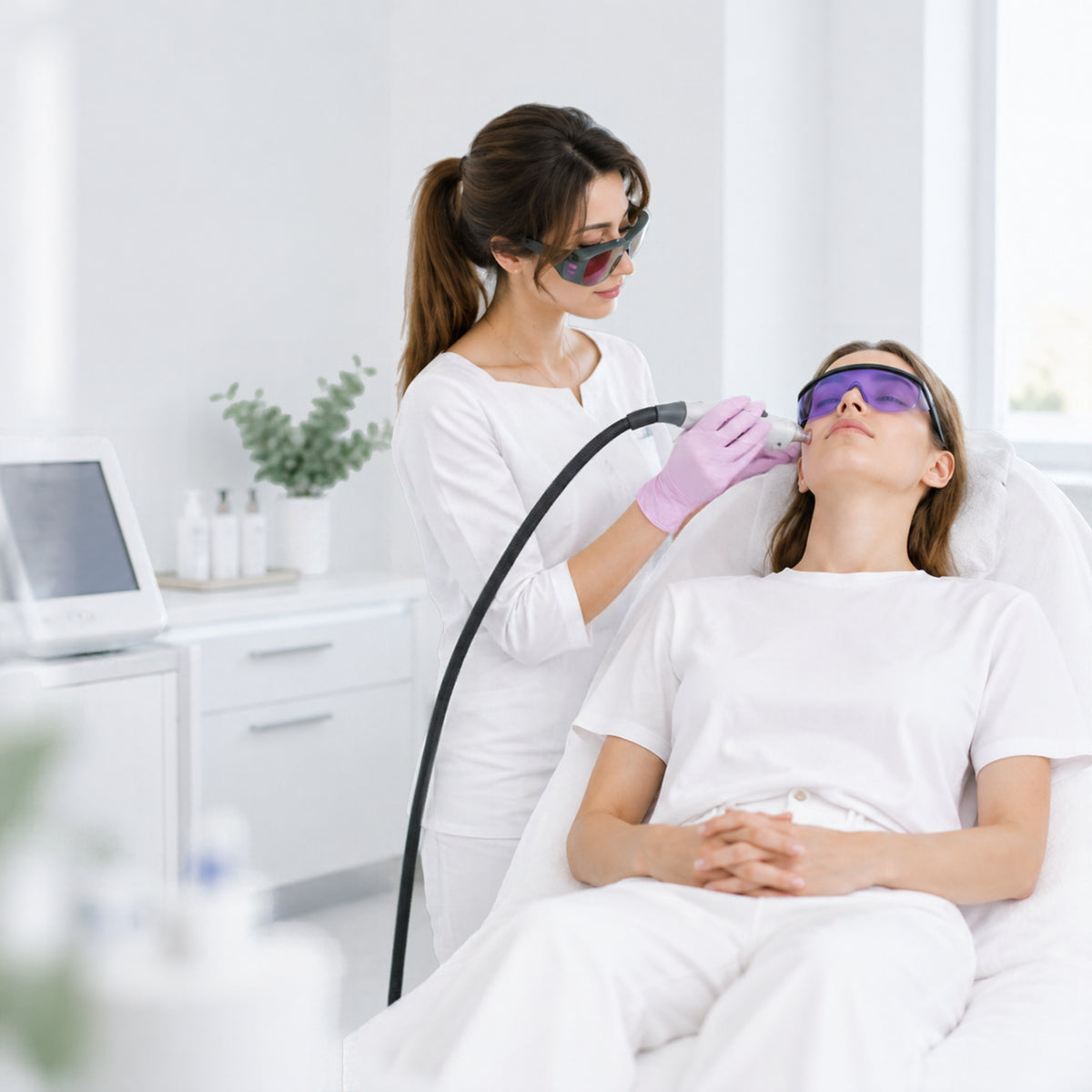
Your client's skincare can only do so much. As skin ages, even a disciplined routine of cleansing, moisturizing and daily sunscreen can leave it looking dry, rough or dull. When skin runs short on moisture, fine lines look deeper, and makeup collects in uneven patches instead of gliding on.
A topical skin booster adds a concentrated, professional-strength step to that routine, applied in the treatment room rather than at the bathroom sink. Before you add one to your menu, though, know exactly what kind of product you're working with. The term "skin booster" covers two very different things: some are injected into the skin by a medical provider, while topical boosters are applied to the skin's surface and never injected.
Access Bio Wellness is a U.S. distributor of advanced skin boosters from Korea. Our portfolio is built so each product works with the next: a curated line of Korean topical skin boosters featuring PN, recombinant human collagen, HA, PLLA and CaHA, with new formulations added as the market moves. Every booster in the line is topical-only and supported by in-clinic finishing care and at-home products that extend results between visits.
What you'll learn from this article
- What a skin booster is
- How providers prepare and apply a skin booster
- Which skin concerns may benefit from a professional skin booster treatment
- What skin booster results clients can realistically expect
- Which safety, handling and provider precautions matter most
- How medical spas can add our skin boosters to a professional skin care service
What is a skin booster?
A skin booster is a concentrated treatment designed to improve the look of skin quality: hydration, smoothness, tone and firmness. There are two kinds. Injectable skin boosters are placed into the skin by a licensed medical injector. Topical skin boosters are professional formulas applied to the skin's surface during an in-clinic session.
Every Access Bio Wellness skin booster is topical-only. PiNkLLA, PLORE, CAHAFILL, PNAD and Collaborne must never be injected, are not dermal fillers and are sold as cosmetics. Some come as lyophilized vials that you mix right before the session; others come in prefilled syringes used only to dispense the gel onto the skin, never into it.
How the two compare:
- Who applies it: a trained medical professional applies a topical booster; a licensed medical injector places an injectable one.
- Where it goes: topical boosters sit on the skin's surface; injectables go inside the skin by needle.
- How it's classified: topical boosters are cosmetics; injectable boosters are medical procedures.
- Downtime: follows the device treatment it's paired with; the booster itself adds 2–3 minutes.
How do providers prepare and apply a skin booster?
Start with a consultation. Before the first session, review the client's allergies, current medications and whether they are pregnant. All our boosters are add-ons applied as a finishing step after an in-clinic professional treatment, following the device manufacturer's post-treatment instructions (microneedling, RF microneedling, fractional laser or any device in the clinic), then left to absorb for 2–3 minutes. Preparation depends on the format, and the details matter:
- PiNkLLA (lyophilized vial): add 6 mL of sterile water or normal saline and shake by hand for about one minute. Do not use a vortex mixer. Apply right after mixing.
- PLORE (lyophilized vial): add 6 mL of normal saline, shake by hand for five minutes, then let it rest for 10 minutes. No vortex, and no overnight hydration.
- CAHAFILL, PNAD and Collaborne (prefilled syringes): ready to use. The syringe only dispenses the gel onto the skin's surface.
Finish every session by applying DERMA42, after you wipe with a wet gauze.
Which skin concerns may benefit from a professional skin booster treatment?
Topical skin boosters suit clients whose skin looks dehydrated, dull, uneven, tired or less firm than it used to. Start with PiNkLLA as the foundation, then add one targeted booster for the client's main concern.
- PiNkLLA, the all-in-one foundation for firmer-looking skin, smoother-looking texture and a more even-looking tone: 35 mg PLLA and 8 mg PN per vial, plus vitamin C and glutathione in a sodium hyaluronate base.
- PLORE, for skin that looks dehydrated and thin, with a more hydrated, plumper-looking result: 47 mg PLLA and 8 mg non-cross-linked sodium hyaluronate per vial.
- CAHAFILL, for firmer, more lifted-looking skin: 3% CaHA microspheres in a 24 mg/mL cross-linked HA gel.
- PNAD, for tired, low-vitality or dehydrated-looking skin: NAD+ and NMN, paired with PN and HA.
- Collaborne, for skin that looks less firm and less elastic: recombinant human collagen Types I and III, PN, HA and a peptide complex.
A quick rule for the two PLLA boosters: choose PLORE when hydration and density matter most, and PiNkLLA when the goal is tone and texture.
What skin booster results can clients realistically expect?
Clients should expect gradual improvement in how their skin looks and feels, not an overnight transformation. Most protocols run four sessions, two weeks apart, followed by one maintenance session every four to six weeks.
In our in-house study, 90% of participants reported being satisfied after one session of PiNkLLA combined with a device treatment (in-house marketing study, open-label, not IRB-reviewed). Results reflect the combined treatment, not the booster alone, and individual results vary. The two-week and four-to-six-week intervals apply when boosters are used on their own; when a booster is paired with a device, follow the device's protocol.
Which safety, handling and provider precautions matter most?
The most important rule: topical skin boosters are for the skin's surface only and must never be injected. That includes products supplied in prefilled syringes. Screen every client for allergies, medications and pregnancy before the first session, and use one vial or syringe per full-face session.
Handling protects the formula. Store PiNkLLA at room temperature, away from heat and sunlight, and never freeze it. Store the syringe products below 30°C (86°F), away from sunlight and moisture, and never freeze them. Unopened, these products have a three-year shelf life. Mix powder vials by hand only, follow each product's mixing and resting times exactly, and apply right after preparation.
How can medical spas add our skin boosters to a professional skin care service?
Offer a booster to clients already booked for a device treatment: same visit, 2–3 extra minutes, then convert interested clients into a four-session series. One booster per concern keeps the menu easy to explain and makes the recommendation feel like expert advice rather than a sales pitch.
Our line is designed to work as a system. cêpoLAB RX preps the skin before the device, the booster delivers the in-clinic results, DERMA42 finishes the session, and clients continue at home with DERMA42 Teramide Soothing Relief Serum and DERMA42 Teramide Barrier Balancing Cream. That gives your clinic a natural retail follow-up after every visit. Professional products are available to approved professional accounts, through our website or a sales representative.
Frequently asked questions
Are topical skin boosters the same as injectable skin boosters? No. Topical skin boosters are applied to the skin's surface during an in-clinic session. Injectable skin boosters are placed into the skin by a licensed medical injector. Access Bio Wellness boosters are topical-only and must never be injected.
Are topical skin boosters FDA-approved? Our skin boosters are cosmetics and are not FDA-approved. U.S. law does not require cosmetics to be approved by the FDA before they are sold.
Are skin boosters the same as dermal fillers? No. Our topical skin boosters are not dermal fillers and are not designed to add volume beneath the skin.
How many skin booster sessions does a client need? A typical schedule is four sessions, two weeks apart, followed by maintenance every four to six weeks. Results vary.
Is the collagen in Collaborne from animals? No. Collaborne is made through recombinant biotechnology, without animal sources. "Human" describes its structure, which mirrors human collagen Types I and III; it is not taken from human or animal tissue.
What should clients use at home after a skin booster session? DERMA42 Teramide Soothing Relief Serum followed by DERMA42 Teramide Barrier Balancing Cream, morning and night, starting when their provider advises. Both can be bought online without a professional account.
Who can buy Access Bio Wellness skin boosters? Professional products require an approved professional account. Clients can ask their provider whether a product is offered at their clinic.
Bring topical skin boosters into your treatment room. Request a professional sample kit →
Clinical or technical questions? Email wellness@accessbio.net.
Access Bio Wellness skin boosters are topical cosmetics for professional use only. They are not injectable, not dermal fillers and not FDA-approved. Results vary.